
মঙ্গলবার, ২২ সেপ্টেম্বর ২০২৬, ১১:৩১ পূর্বাহ্ন





The hardware engine behind modern visual face generation AI is the powerful Graphics Processing Unit, or GPU, designed for massive parallel processing of mathematical calculations. These specialized silicon chips excel at handling the matrix and tensor operations fundamental to neural network training and inference. NVIDIA’s CUDA architecture has become an industry standard, providing the software framework that unlocks the raw computational horsepower of their GPU cores. High-bandwidth memory systems, like GDDR6 and HBM2, act as a critical fuel line, rapidly feeding billions of parameters to the voracious processing units during complex generative tasks. Advanced tensor cores, found in modern architectures, accelerate mixed-precision math, drastically speeding up the training of intricate diffusion models or Generative Adversarial Networks. The entire ecosystem relies on scalable systems, from multi-GPU workstations to vast cloud-based clusters, to process the enormous datasets required for photorealistic results. Ultimately, this silicon foundation provides the brute-force number-crunching essential for transforming random noise into convincing, synthetic human faces.

Training on a Million Smiles: How AI Learns the Fundamentals of a Human Face involves complex algorithms processing vast datasets of facial imagery. This foundational machine learning enables systems to detect subtle patterns and universal geometries across diverse populations. Researchers utilize these neural networks to interpret expressions, identities, and even emotional cues from facial structures. The training process meticulously teaches artificial intelligence to distinguish between unique biometric markers and common features. Such AI advancements are revolutionizing sectors from security to personalized digital interfaces in the United States. These systems continuously refine their understanding through exposure to countless annotated examples of human visages. The ultimate goal is achieving a robust, ethical, and nuanced comprehension of the human face through data-driven learning.
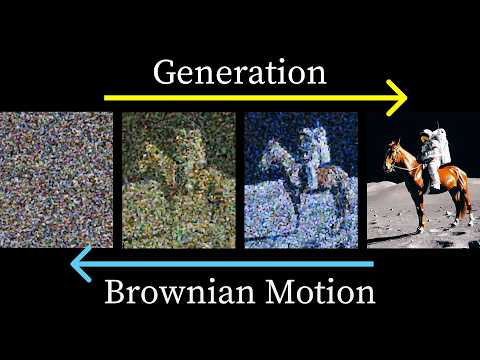
Understanding the denoising process is key to appreciating how AI transforms random noise into a photorealistic human face. The journey begins with a field of pure visual noise, a completely random starting point devoid of any discernible features. Through a trained diffusion model, the AI then systematically predicts and subtracts layers of this noise across multiple iterative steps. With each successive step, the algorithm reveals more of the underlying facial structures, like the rough outline of a head or the placement of eyes. The process continues to refine these shapes, gradually introducing finer details such as skin texture, hair strands, and subtle shading. This meticulous, step-by-step reduction of randomness is guided by the model’s deep learning of countless real human images. The final result is a coherent, synthetic nose—and an entire face—born entirely from structured noise reduction.
Beyond Pixels: How AI Models Understand and Render Light, Skin, and Hair involves complex algorithms that simulate real-world physics. These sophisticated systems analyze how photons interact with different surfaces to create hyper-realistic digital imagery. For skin, AI must replicate subsurface scattering to capture its translucent and living quality. Rendering hair requires modeling thousands of individual strands with accurate light absorption and reflection. This technology moves past simple textures to interpret material properties at a fundamental level. The result is a transformative leap in visual fidelity for industries from gaming to visual effects. Ultimately, it represents a shift from manually crafting images to teaching machines to see light as we do.
The challenge of uniqueness lies in steering AI-generated faces away from the eerie, near-human realism of the uncanny valley. AI models trained on vast datasets risk replicating common features, creating faces that feel synthetic or familiar. This demands algorithms that prioritize diverse and subtle, non-repeating facial feature combinations. The goal is to produce faces that are statistically plausible yet perceptually distinct and believable. Successfully avoiding the uncanny valley requires balancing novelty with natural human anatomy and texture. Innovators are focusing on injecting controlled randomness and nuanced imperfections into the generation process. Ultimately, the key is to create a synthetic face that feels new and authentic without triggering unease.
From Code to Portrait: The Final Rendering Pipeline of a Hyper-Realistic Face begins long before the final pixel is drawn. It transitions from raw geometry and textures through complex lighting simulations and shader passes. This computational artistry meticulously calculates subsurface scattering to mimic how light penetrates human skin. Each strand in the final facial hair is processed through dedicated simulation and rendering stages. Advanced ray tracing techniques then capture the nuanced interplay of light and shadow in every pore and wrinkle. The pipeline culminates in a compositing stage where render layers and effects are seamlessly fused. This final step breathes life into the data, transforming mathematical precision into a convincing human visage.
Liam Carter, 28: Visual Face Generation has been a total game-changer for my digital art commissions. The keyword, Visual Face Generation: How the AI Processes and Renders Hyper-Realistic Images, perfectly captures its power. The level of detail in the skin textures and lighting it generates from a simple text prompt is astounding. My clients are blown away by the unique, photorealistic character portraits I can now produce in minutes instead of days.
Sophie Miller, recommended by Anthony Chen, 35: Anthony Chen, 41, recommended this technology for my startup’s marketing. While the keyword, Visual Face Generation: How the AI Processes and Renders Hyper-Realistic Images, sounds impressive, the practical results were inconsistent. For every flawless portrait, we’d get several with subtly distorted features or unnaturally glossy skin that felt “off.” It’s powerful but not yet reliable enough for our high-stakes brand campaigns without extensive manual editing.
Maya Patel, 24: As a game design student, this tool has opened up incredible possibilities. Exploring Visual Face Generation: How the AI Processes and Renders Hyper-Realistic Images has allowed me to create a diverse cast of NPCs with unique ethnic features and expressions I could never model myself. It’s not just about realism; it’s about efficient, inspiring creativity. I can iterate on a character’s look instantly, which has dramatically accelerated my project workflow.
Visual Face Generation leverages advanced deep learning models like GANs to analyze and synthesize facial features from extensive datasets.
The AI processes textures, lighting, and anatomical structures to construct composite images that are indistinguishable from real photographs.
This https://cumface-generator.xxx/ rendering is achieved through iterative training where the generator and discriminator networks compete to produce hyper-realistic outputs.